
Updated July 18, 2026
If you follow a paleo lifestyle, you already know the difference a truly good egg makes. Deep orange yolks, firm whites, and none of the question marks that come with factory farming. The surest way to get eggs like that every single morning is to raise a few hens of your own, and the single most important purchase you will make on that journey is the coop.
A cheap coop is the most expensive mistake in backyard chicken keeping. Flimsy panels warp within a season, thin chicken wire tears open the first time a raccoon gets serious, and a badly ventilated hen house leads to sick birds and fewer eggs. After looking closely at what is on the market, The Chicken Coop Company is the brand we would put our own flock in, and in this review we will show you exactly why.
The Lineup at a Glance
| Model | Flock size | From | Best for |
|---|---|---|---|
| Leghorn Cottage | Up to 4 hens | $549 | First flock, family egg supply |
| Orpington Lodge | Up to 6 hens | $799 | Room to grow, walk-in run options |
| Rhode Island Homestead | 10+ hens | $1,099 | Full homestead, automation-ready |
Free shipping to the lower 48 on coops. Orders typically ship within 24 hours.
Who Is The Chicken Coop Company?
The Chicken Coop Company is a family-owned business based in American Fork, Utah that handcrafts premium wooden chicken coops. These are not flat-pack afterthoughts from a garden furniture catalog. Every coop is designed by people who actually keep chickens, and it shows in the details: reinforced galvanized mesh, metal pull-out cleaning trays, and weather flashing over the nesting boxes so rain never finds its way onto your eggs. They carry strong customer ratings on Trustpilot and the BBB, and they stand behind the coops after the sale.
Built to Protect Your Flock
Anyone who has lost a hen to a raccoon or a fox knows the feeling. You do not keep chickens the way you keep a lawn ornament. You get attached, your kids get attached, and predator-proofing stops being a spec-sheet line and becomes the whole point.
This is where The Chicken Coop Company separates itself from nearly everything else at this price point. Most retail coops use thin chicken wire that a determined raccoon can tear open with its hands. These coops use heavy-duty galvanized hardware cloth, securely framed and fastened into the wood, backed by reinforced structural framing. Raccoons, foxes, and birds of prey stay on the outside. For high-pressure predator areas, they also make a dedicated predator protection kit that hardens the coop even further.
The Three Coops Compared
Every model shares the same construction DNA, so choosing is mostly a question of how many hens you plan to keep and how much room you want to give them.
Leghorn Cottage: The Starter Coop (Up to 4 Chickens)
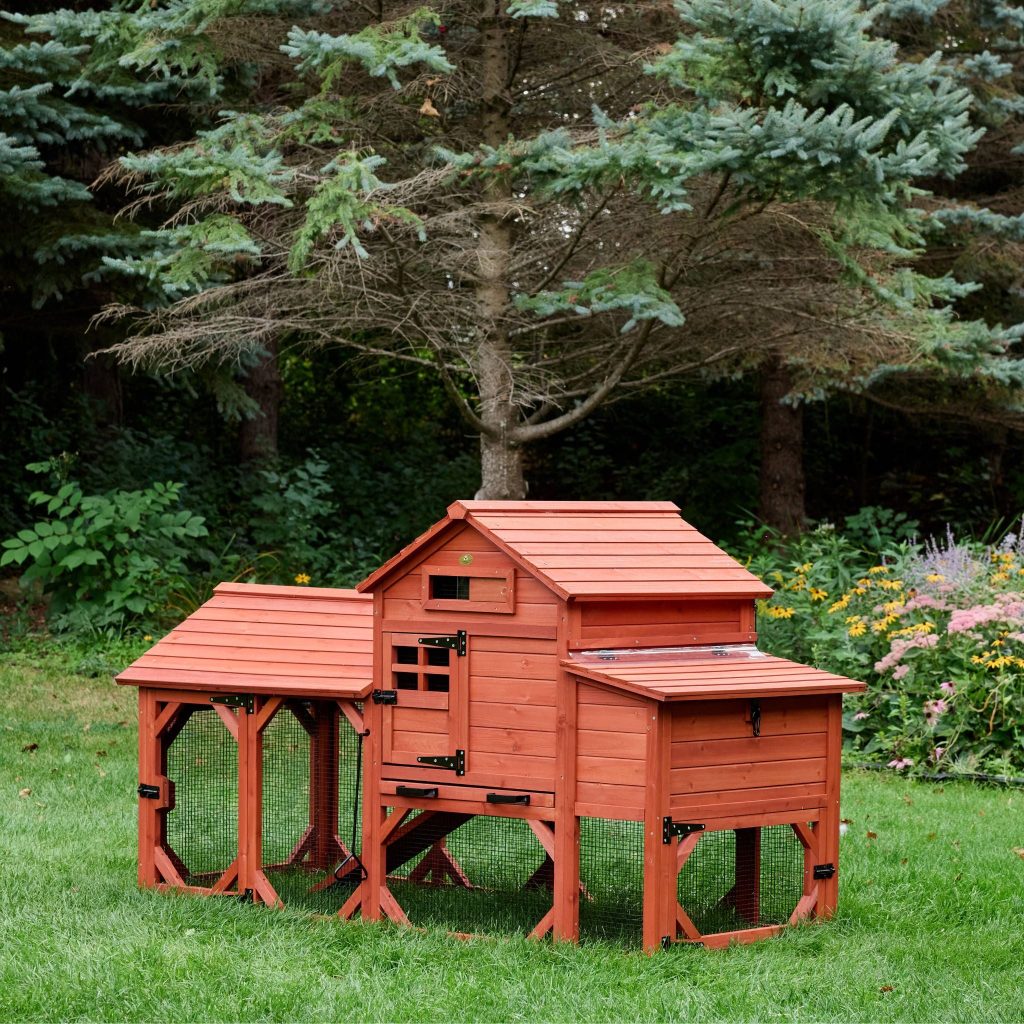
Starting at $549, the Leghorn Cottage is the right first coop for most families. It houses up to 4 chickens, which is exactly the flock size that keeps a household of four in fresh eggs. You get the same hardware cloth, pull-out cleaning tray, and flashing over the nesting box as the bigger models, just in a compact footprint that fits a normal backyard.
Orpington Lodge: The Family Flock (Up to 6 Chickens)
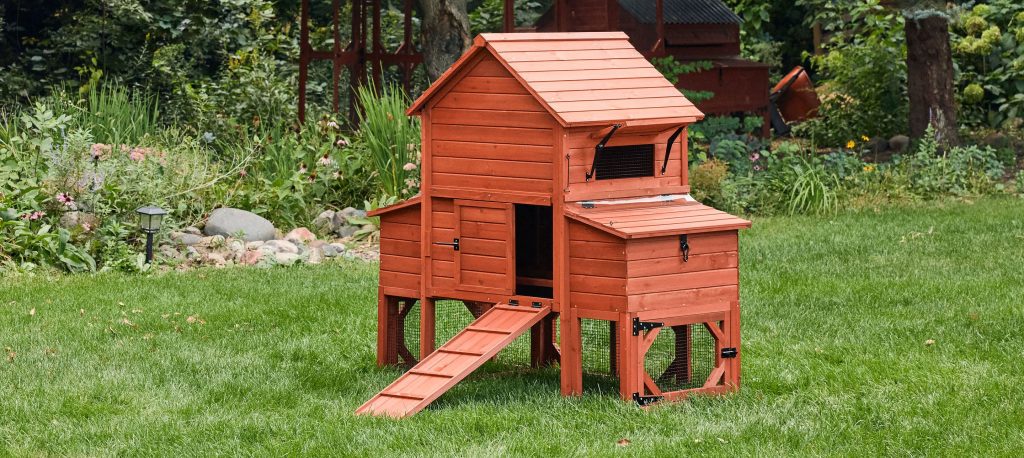
Starting at $799, the Orpington Lodge steps up to a 6-chicken capacity with a double nesting box and reinforced structural framing. It is the sweet spot if you want enough eggs to share, and its extended run options (including a full walk-in run) mean you can give your hens serious space without rebuilding anything.
Rhode Island Homestead: The Serious Setup (10+ Chickens)
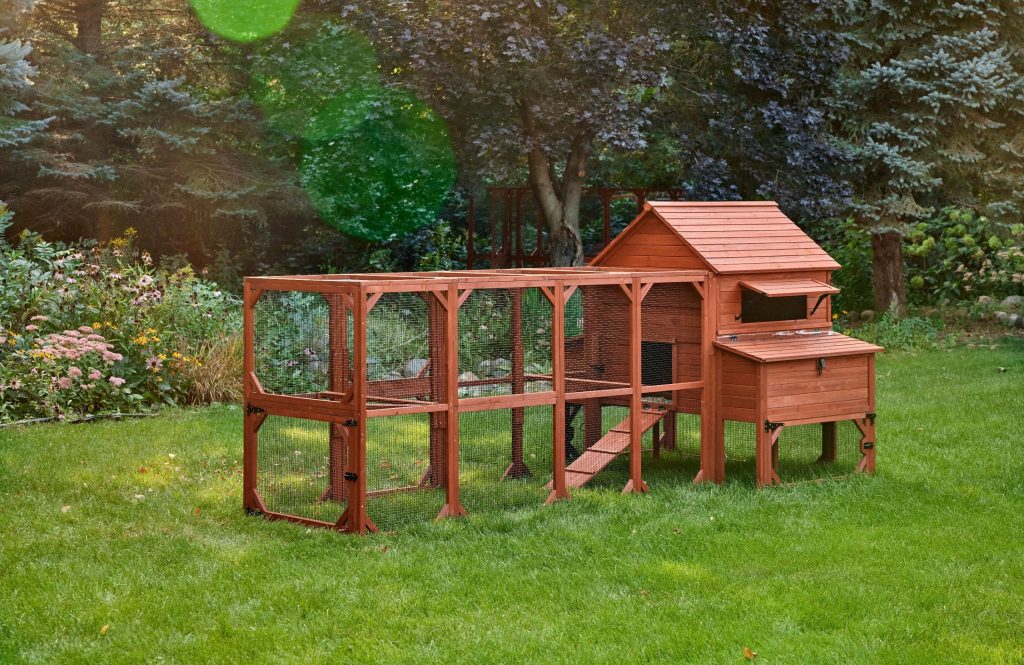
Running from $1,099 to $2,099 depending on run configuration, the Rhode Island Homestead is the full homestead package: 10+ chickens, 6 nesting boxes, raised interior roosting bars, high clearance you can work in, and an 8-foot-wide walk-in run option. It is even compatible with automated door motors, so the coop closes itself at dusk whether you are home or not.
Designed for Healthy Hens and Easy Mornings
Plenty of coops look charming in photos and fail the birds that live in them. These are engineered around flock health: raised roosts for natural sleeping posture, ventilation positioned to prevent the respiratory issues that plague badly designed hen houses, and weather flashing above the nesting boxes that keeps the interior dry and draft-free through real weather.
Then there is cleaning, which is honestly where most chicken-keeping enthusiasm goes to die. Every model uses deep metal pull-out dropping trays. Slide the tray out, empty it, slide it back. What used to be a scraping chore becomes a two-minute job, and a clean coop is the single best thing you can do for your flock’s health and your egg quality.
A Coop That Grows With Your Flock
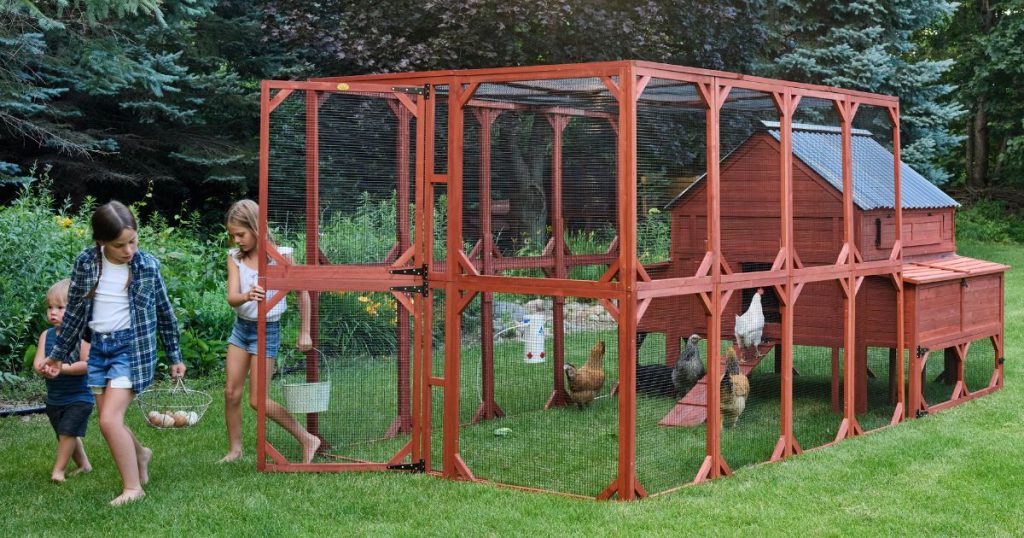
Chicken math is real: nearly everyone who starts with three hens ends up wanting six. Most brands force you to sell your first coop and start over. The Chicken Coop Company builds a modular ecosystem instead, with 3-foot run extensions and towering walk-in runs that attach to your existing coop. Your setup adapts as your hobby grows, and your original investment keeps working.
Beyond the Coop
They also carry the supporting gear that makes winter and daily care easier: an energy-efficient radiant coop heater with a 3-year warranty (from $114.99), upcycled coffee-ground bedding that stays drier and smells better than pine shavings, herbal nesting pads, waterers, and even live chicks if you are starting your flock from scratch. Being able to outfit the whole operation from one place, from one company you trust, is genuinely convenient.
Which Coop Is Right for You?
Feeding a household of 3 to 4 on backyard eggs: the Leghorn Cottage at $549 is all you need. Four hens, roughly two dozen eggs a week, minimal footprint.
Want extra eggs to share and space to grow: the Orpington Lodge from $799, ideally with a run extension. The double nesting box and walk-in run options give you real room to expand.
Going full homestead: the Rhode Island Homestead from $1,099. Ten or more birds, six nesting boxes, a walk-in run you can stand in, and automation-ready doors.
Our verdict: if you are serious about backyard eggs, buy the coop once. The Chicken Coop Company costs more than the flimsy kits, and it is worth every dollar in birds you do not lose, mornings you do not spend scraping, and a setup that expands instead of getting replaced. Start with the model that fits your flock today and add runs as your chicken math takes over.
Backyard Coop FAQs
How many chickens do I need for a family of four?
Three to four hens will give most families 18 to 24 eggs a week during laying season. That is exactly what the Leghorn Cottage is sized for.
What actually makes a coop predator-proof?
Galvanized hardware cloth instead of chicken wire, secure framing so panels cannot be pried loose, and a door that locks tight at night. Raccoons are dexterous and persistent, and thin chicken wire will not stop them.
Are backyard eggs really different from store-bought?
Hens that get sunlight, forage, and a varied diet lay eggs with noticeably richer yolks and better omega-3 profiles than caged commercial hens. For a paleo kitchen, that difference shows up in everything from breakfast to baking.
Do these coops require assembly?
Yes, they arrive as pre-built panels designed for straightforward assembly. The heavy work of joinery and mesh installation is already done at the workshop in Utah.
What about winter?
The coops are built from solid wood with draft-free ventilation, and the company sells an energy-efficient radiant heater with a 3-year warranty for cold climates. Chickens handle cold better than most people expect, provided they stay dry and out of drafts.
Affiliate Disclaimer: This post contains affiliate links. If you purchase through these links, we may earn a small commission at no extra cost to you. We only recommend products we genuinely believe in, and our opinions remain our own.
Get free weekly recipes directly in your inbox 💌
Thank you!
You have successfully joined our subscriber list.


